

Content strategy still drives SEO. That part hasn’t changed since I first published this guide in 2020. What has changed is who reads your content first: a person scrolling Google, or an AI system summarizing your page before a person ever sees it
Search behavior has shifted hard in the last two years. AI Overviews now show up on a large share of Google searches, and a growing number of people get answers from AI tools like ChatGPT, Claude and Perplexity instead of clicking a traditional blue link. Some analyses put AI Overview click-through rates as low as 8%, compared to 15% on searches without one, according to a 2026 breakdown by Contently. Other research shows organic click-through rates on AI Overview searches falling from 1.76% to 0.61%, a 61% drop, per a 2026 analysis of over 5 million queries covered by RelevantAudience.
This Article Will Discuss:
That sounds like bad news but it’s not the whole story. The same research found that pages cited inside an AI Overview earn 120% more clicks per impression than pages that aren’t cited, and AI search traffic overall grew nearly 43% year over year. Visitors who arrive through AI search convert at roughly three times the rate of an average organic visitor, because they’ve already done their research and just need the final answer.
What’s important to understand is that a content strategy in 2026 still needs the fundamentals from our original guide (audience research, a real editorial calendar, consistent publishing). But it also needs content built to earn a citation, not just a ranking. Below I walk through how to work on both.

What Google Actually Rewards
Google’s own documentation on creating helpful, reliable, people-first content hasn’t wavered on one point: write for a specific audience that would find the page useful on its own, not for a search engine. Google also states plainly, in its guidance on AI-generated content, that it rewards content quality over how the content was produced. Using AI tools isn’t a penalty. Publishing thin, unverified, or purely AI-generated pages with no human editing is.
That’s a meaningful distinction for any business writing content in 2026 and beyond. AI can speed up drafts, research, and outlines. A person on your team still needs to check every fact, add real experience, and decide what the page actually says. I used AI drafting tools to help research and structure this article, and a human editor reviewed it for accuracy before publishing. I think that’s worth telling you, both because it’s honest and because it’s a good model for how your own team should work.
The Content Types Worth Your Time
You don’t need to produce every content format that exists. You need the handful that match how your audience actually searches and buys. Here’s where most businesses get the most return.
- Blogs
- Products or Services Pages
- Email Marketing
- eBooks & White Papers
- Case Studies
- Templates or Worksheets

Blog Posts
Blog posts remain one of the easiest ways for people to learn about your business and offerings. They work on a phone during a commute and on a desktop during a lunch break. A blog post earns trust when it answers a real question completely, uses clear formatting (short paragraphs, useful subheadings, no filler), and gets published on a schedule your readers can count on.
Posting once and disappearing for six months tells Google, and your readers, that you’re not consistently active in your field. A steady cadence, even one solid post every two weeks, beats a burst of ten posts followed by silence.
Product and Service Pages
If you sell a product or service, a page needs to do more than list features. They need to fully answer the questions a buyer has before they’ll pick up the phone or fill out a form. Aim for a structure that helps your page cover what the service or product line offers, broken into short sections with headers so a skimming reader can still find what they need.
Length alone won’t help you. A 1,500-word page with no real detail ranks worse than a tight 600-word page written by someone who clearly knows the subject. Including a short FAQ section, listicles, and features can help deliver what you need your page to say.
Email Marketing
Email is where your content strategy pays off twice. You already did the work to create a great blog post or guide. Email gets it in front of people who’ve already shown interest and know your product. They are invested and can become ongoing brand ambassadors.
Segment your list by where someone stands with you: current customer, past customer, or lead who hasn’t bought yet. Each group needs a different message and a different call to action. A current customer might respond to a loyalty offer. A cold lead needs education before a pitch. Sending the same email to everyone wastes the list you worked to build.
eBooks and White Papers
Some topics are too big for one blog post. When a subject comes up again and again from customers, in sales calls, in support tickets, in comments on your existing posts, it’s a strong sign the topic deserves a long-form guide.
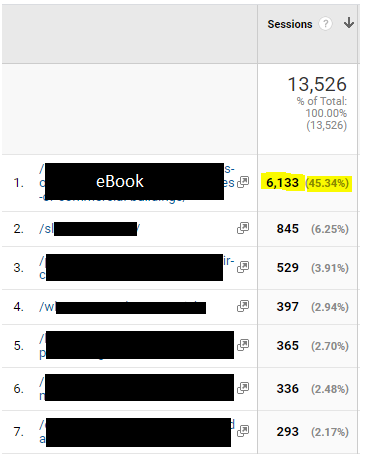
Here’s a fictional example, for illustration only. Imagine a home foundation repair company that noticed the same question kept coming up. “How do I know if my foundation crack is serious?” They built a 20-page guide answering it in full detail, gated behind an email signup with a few ungated sections for SEO. In this hypothetical, the guide becomes their single highest-traffic page and their top source of qualified leads within a year. That result is a made-up scenario meant to show the pattern, not a real case study. Replace it with your own client’s real numbers, a real gated-content report from your CRM, or a real interview with your sales team before this page goes live.
Find Your Audience Before You Write Anything
Every piece of content above works better once you know exactly who you’re writing for. Write down the traits of your real customer (aka your target audience): their role, their industry, the problem that brought them to you, the objection that almost stopped them from buying. If you have sales call recordings or support tickets, mine them for the actual words customers use. That language, not the language your team uses internally, is what belongs in your headlines and page copy.
Outlook Studios Tip: Using internal team/company language does not help your existing or future customers. Keep it simple and terminology they can understand. Too many companies try to force terminology on their client base not understanding that they are neglecting their future customers.
Once you know your audience, find where they already spend time reading. Look at the blogs, forums, and communities they visit. Take a look at the different social media channels such as TikTok, Instagram, and Facebook. That’s where you’ll find real questions worth answering and real gaps in what’s already been written.
Build an Editorial Calendar You’ll Actually Use
An editorial calendar keeps a content strategy from falling apart after the first busy month. It doesn’t need to be complicated. A shared spreadsheet with a publish date, a topic, an owner, and a status column covers most small teams.
The real value of a calendar isn’t the schedule. It’s the coordination. When you know a blog post is going live on the 15th, you can plan the email that promotes it, the social post that links to it, and the sales follow-up that references it, all in the same week instead of scattered across a quarter.


Where to Find Content Ideas
You likely have topic ideas already. Write them down before you lose them. A running list, even a messy one, beats trying to remember good ideas later.
Beyond your own list, a few reliable sources:
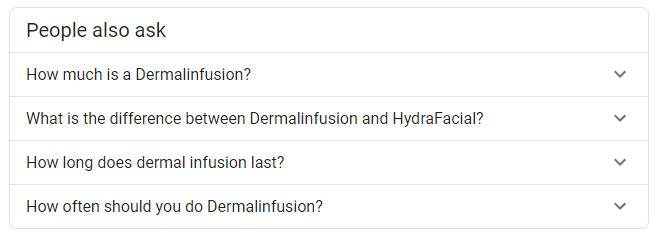
Type a candidate question into Google and check the “People Also Ask” box. It surfaces related questions real searchers are asking, often ones you hadn’t considered.
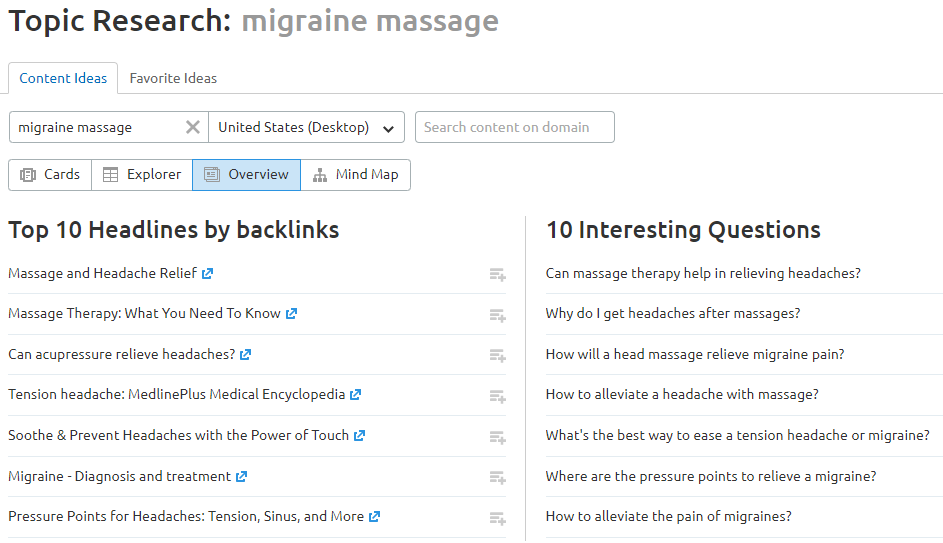
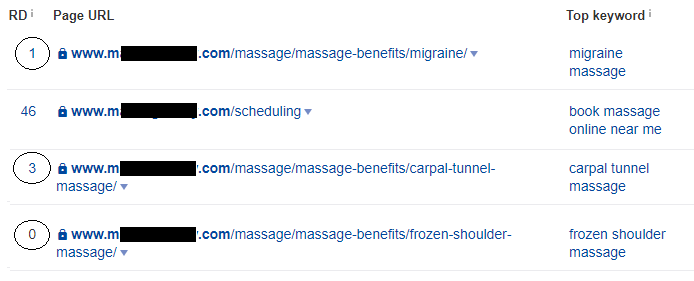
Keyword research tools like SEMrush’s Topic Research and Ahrefs’ Top Pages report still work well for finding search volume and gaps in what competitors have covered. Ahrefs’ Top Pages, run against a competitor’s domain, shows you their best-performing content and how many sites link to it, a good target list for pages you could out-write.
Since a real share of searches now get answered inside an AI Overview instead of a list of links, it’s worth checking how AI platforms answer your target questions directly. Ask ChatGPT or Google’s AI Overview the same question your customers ask. If the answer is thin, outdated, or wrong, that’s a real opportunity: a well-sourced, clearly written page has a real shot at being the source an AI system cites next.
Outlook Studios Tip: By testing your questions on LLMs and AI Overview you will get a diverse set of answers. The advantage of this is that it allows for better understanding of what users are seeing. You will likely get a similar answer but it opens the door to see what else is being shown by the fan queries.
Don’t Let Old Content Die
One of the most common mistakes including myself in content strategy is treating a published page as finished. A blog post that ranked well two years ago and quietly slid down the results probably doesn’t need a rewrite. It usually needs an update: new statistics, a fresh example, a section addressing a question that’s become common since you first wrote it.
In our situation what we are seeing is the usage of LLMs platforms like ChatGPT, Claude, Gemini and Perplexity as platforms for content research and strategy.
Avoid deleting large sections of a page that’s ranking, even an older one. If a fact is flat-out wrong, correct it. If a paragraph is outdated but not wrong, consider marking it as outdated rather than erasing it, since the page’s history and existing links are part of why it still ranks. Fresh, accurate content keeps both Google and your readers coming back to a page instead of clicking away to find the update somewhere else.
Putting This Into Practice
A content strategy that works in 2026 looks a lot like a good content strategy always did: know your audience, publish consistently, cover a full range of formats, and keep old content alive instead of letting it rot. The addition is treating AI search as a real channel, not a threat to ignore. Write the kind of clear, well-sourced, genuinely useful page that earns a citation whether a human or an AI system is the one reading it.